Stop Buying Pulsar 125 Until You See the 2026 Design
I drove the new Bajaj Pulsar 125 2026 yesterday in Maharashtra, weaving through the chaotic traffic of Jalna to see if this “legend” still has the muscle to lead. While the streets are buzzing about the “all-new” look, there is a catch you need to know before visiting the showroom.
The 125cc segment is more competitive than ever, and Bajaj has finally pulled the trigger on a much-needed aesthetic overhaul. But is it just a fresh coat of paint, or has the Pulsar actually evolved? Let’s dive into the grit.
The Disappointment
If you were expecting a mini-N250 or a radical frame shift, prepare to be slightly underwhelmed. I noticed immediately that the core skeleton remains the same aged double-cradle frame. While rivals like the TVS Raider are moving toward futuristic monoshock setups, Bajaj has stuck to the classic twin gas-shock absorbers at the rear.
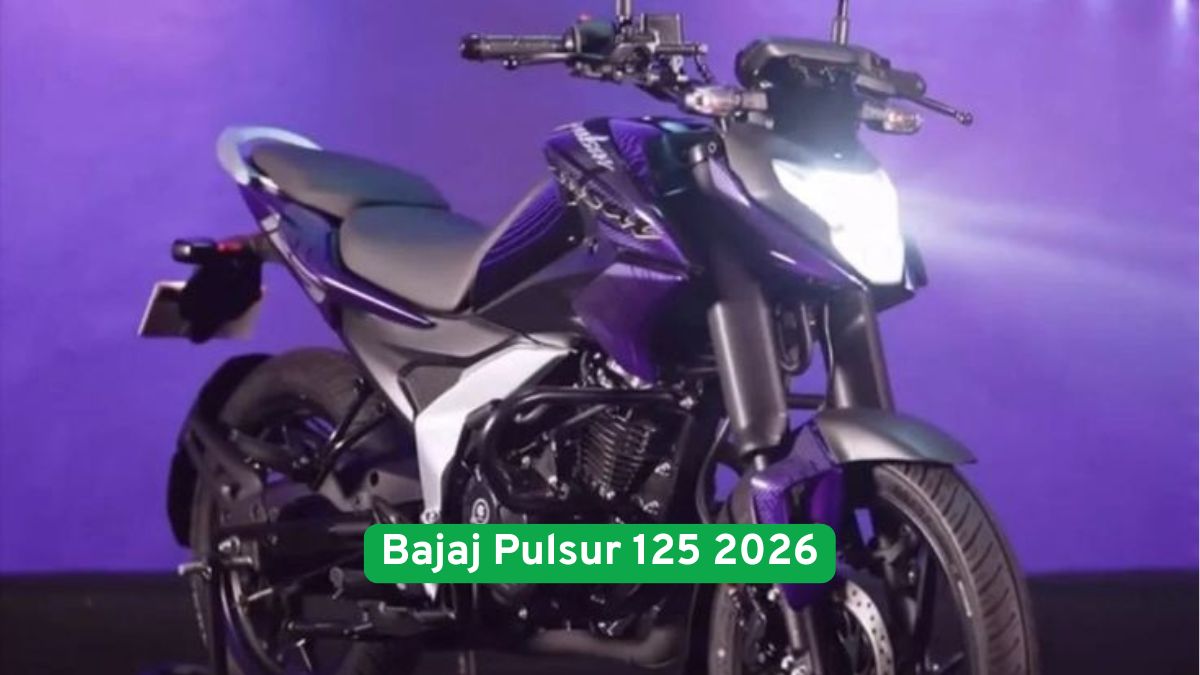
The “New Design” is heavily focused on the face and skin. While the LED lighting is a massive upgrade over the old yellow halogens, the side profile still screams 2010. For a “2026 model,” I expected Bajaj to finally ditch the iconic but dated ‘Wolf Eye’ silhouette for something sharper.
The Surprising Truth
Despite my initial skepticism, the 2026 update brings serious substance where it matters. The new LED headlamp, borrowed from its bigger Pulsar 150 sibling, completely transforms the night-riding experience. During my late-evening test ride back toward Aurangabad, the illumination was crisp, far outclassing the Honda Shine.
The tech suite is where the real value lies. We finally get a fully digital instrument cluster with Bluetooth connectivity. While it lacks turn-by-turn navigation (a big miss!), the call and SMS alerts are seamless. The engine remains the bulletproof 124.4cc DTS-i unit, producing $11.8\text{ PS}$ at $8,500\text{ rpm}$ and $10.8\text{ Nm}$ of torque. It’s not the fastest, but the “Pulsar grunt” is still there, and the new carbon-fiber graphics actually make the tank look significantly beefier.
India-Specific Impact (₹ prices, city data)
The pricing strategy for 2026 is aggressive. Bajaj has positioned the Pulsar 125 to undercut the premium 125cc segment while offering “big bike” looks. Interestingly, in some markets, the price hike is a modest ₹3,500, while certain variants have seen a strategic price correction to stay competitive against the Hero Xtreme 125R.
| City | Estimated On-Road Price (2026 Model) |
| Mumbai | ₹1,07,622 |
| Pune | ₹1,01,956 |
| Delhi | ₹97,731 |
| Bangalore | ₹1,04,946 |
| Chennai | ₹1,01,585 |
Note: Prices vary based on Single Seat vs. Split Seat variants and local RTO taxes.
Rushi’s Verdict
I’ve spent a decade covering the auto beat here in Jalna, and the Pulsar 125 has always been the “safe” choice. For 2026, Bajaj isn’t reinventing the wheel; they are just polishing it. If you want the latest tech and a futuristic frame, go for the Raider. But if you want a bike that feels like a tank, has a 50 kmpl real-world mileage, and now finally looks modern in the rearview mirror with those LEDs, this is it.
Wait for the festive offers before booking, as dealers in Maharashtra are already hinting at exchange bonuses for older 100cc commuters.
FAQ
What is the mileage of the 2026 Pulsar 125?
In real-world city conditions, expect 48-52 kmpl. On highways, it can stretch to 55 kmpl.
Does it have ABS?
No, the 2026 Pulsar 125 continues with a Combi Brake System (CBS) to keep costs low.
Is there a Bluetooth version?
Yes, the Carbon Disc variants now come with a digital console and Bluetooth connectivity as standard.